

A Practical Guide to Animal Study Design for Medical Devices
Before any medical device touches a human patient, it has to pass through animal studies. This is the step between bench testing and clinical trials — the point where you find out whether your device actually works in a living system, whether it causes harm, and whether the data is strong enough to support a regulatory submission.
Most people in the device industry understand that animal studies are required. Fewer understand what makes the difference between a well-designed study that moves your program forward and a poorly designed one that costs you six months and a failed submission.
This is a practical overview of how to think about it.
Start with the 3R principle
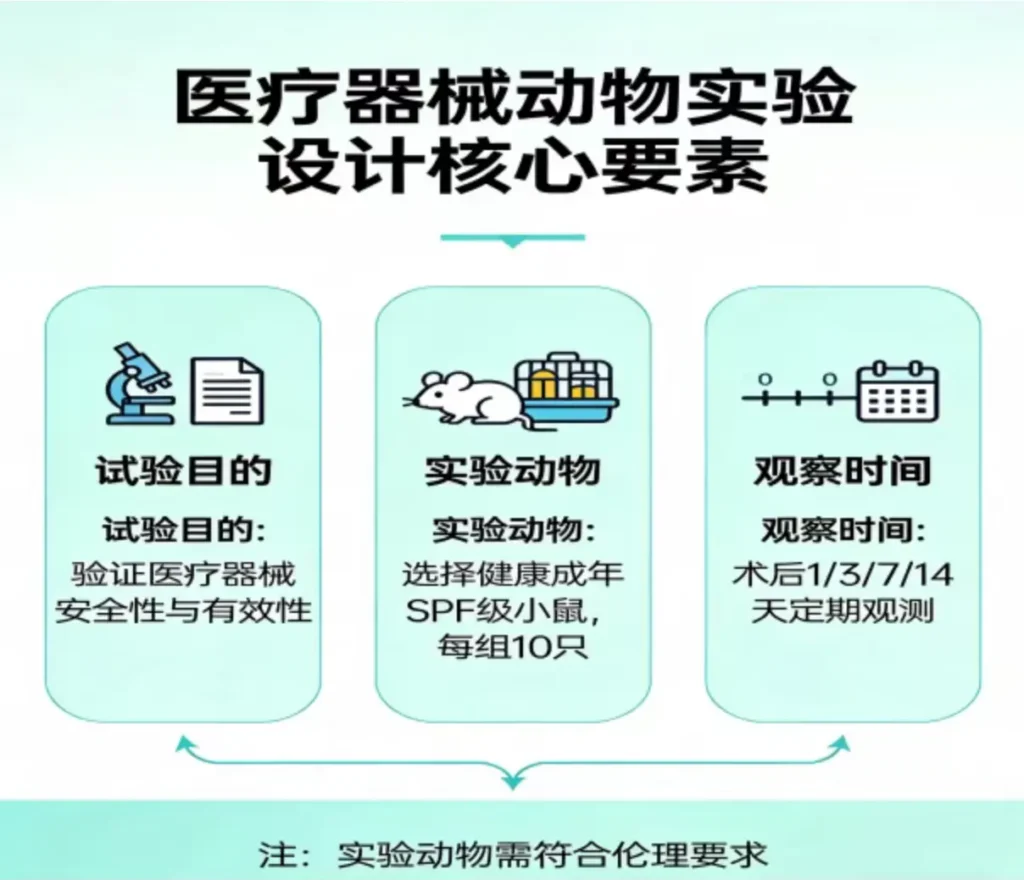
Every animal study in medical devices is built on three rules, known internationally as the 3Rs:
Replace — Use non-animal methods whenever possible. Bench testing, in vitro models, and computational simulation should come first. Only use animal studies when there’s no adequate alternative.
Reduce — Use the minimum number of animals needed to get statistically meaningful results. Not fewer than necessary, but not more either.
Refine — Design procedures to minimize pain and distress. Better surgical technique, better anesthesia protocols, better post-operative care.
This isn’t just an ethical framework. Regulatory agencies — FDA, NMPA, notified bodies in Europe — expect to see 3R principles reflected in your study design. If your protocol uses more animals than justified or skips refinement steps without explanation, reviewers will notice.
Define your study objective first
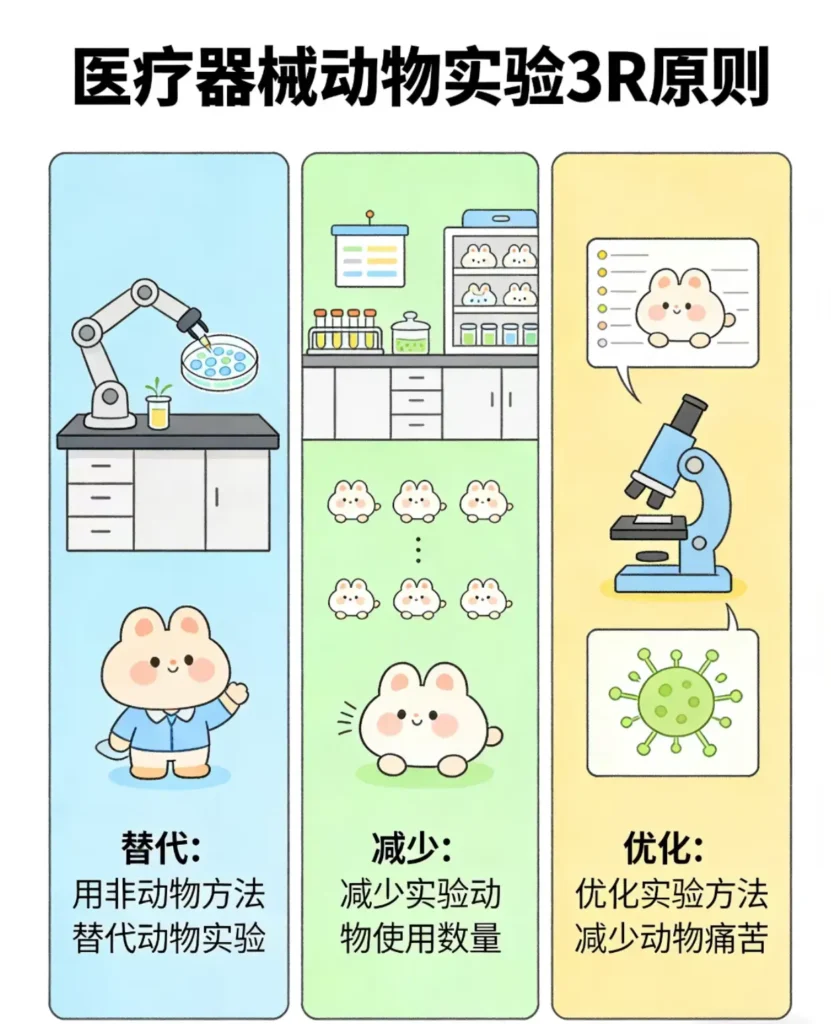
This sounds obvious, but it’s where many teams go wrong. They start designing the protocol before clearly defining what question they’re trying to answer. Medical device animal studies generally fall into three categories:
Feasibility studies — Does the device work mechanically in a living system? Can the surgeon implant it as intended? Is the procedure practical? These are typically early-stage, small-scale studies. Example: testing a new orthopedic material to see if it integrates with bone tissue at all.
Safety studies — Does the device cause harm? Short-term inflammation? Long-term tissue damage? Toxic degradation products? This is usually the core regulatory requirement. Example: evaluating whether an implant triggers chronic inflammatory response over 6-12 months.
Efficacy studies — Does the device do what it’s supposed to do? Example: testing whether an anti-adhesion barrier actually prevents post-surgical adhesion formation.
Sometimes a single study covers all three. Often they’re separate. The important thing is knowing which question you’re answering before you write the first line of the protocol.

Choose the right animal model
Wrong animal model = useless data. The selection needs to account for several factors:
Anatomical and physiological similarity to humans. Pig hearts are structurally close to human hearts — that’s why pigs are used for cardiac device testing. Miniature pigs and beagles are common for hernia mesh studies because their abdominal wall structure is relevant.
Sensitivity to the specific endpoint. Younger animals are more useful for testing calcification in heart valves because their calcium metabolism is more active. The animal needs to be able to show the response you’re looking for.
Standardization. Animals with well-characterized genetic backgrounds and controlled microbiological status produce more reproducible results. Age, weight, and health screening criteria should be defined and documented before the study starts.
Getting this wrong is expensive. If you test a cardiovascular device in an animal model that doesn’t reflect human hemodynamics, the data won’t support your regulatory argument no matter how clean the study execution is.

Get the study details right
Sample size. Enough animals to reach statistical significance while respecting the 3R principle. If the device or biological response has high individual variability, you may need to increase the number. But every animal needs to be justified.
Observation period. This depends entirely on the device. A permanent implant needs long-term follow-up — 6 months, 12 months, sometimes longer. A biodegradable material needs to be observed until complete degradation occurs. Setting the observation period too short is one of the most common mistakes in device animal studies.
Evaluation endpoints. Define what you’re measuring and how. Imaging (X-ray, CT, MRI), histopathology (tissue sections), gross pathology, blood chemistry, device integrity assessment. Any abnormal findings need detailed documentation and root cause analysis.
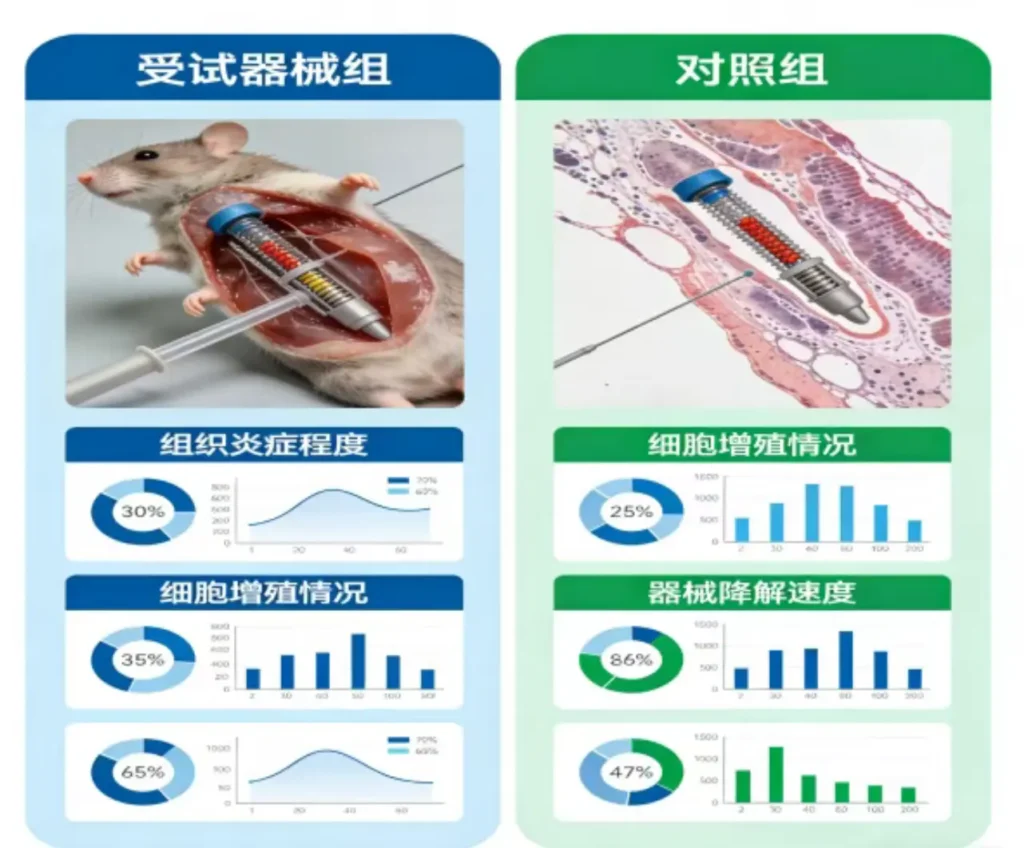
Control groups. Where possible, include a control group using an already-marketed equivalent device. This gives you a direct comparison and makes your data far more convincing at regulatory review. The test device group and control group should be evaluated using the same endpoints — tissue inflammation, cell proliferation, degradation rate, device function.
Device documentation. Record the exact model, specifications, lot number, and sterilization method of every test device used. If you make design changes during the study, document them and assess whether they affect results.
Why this matters beyond the lab
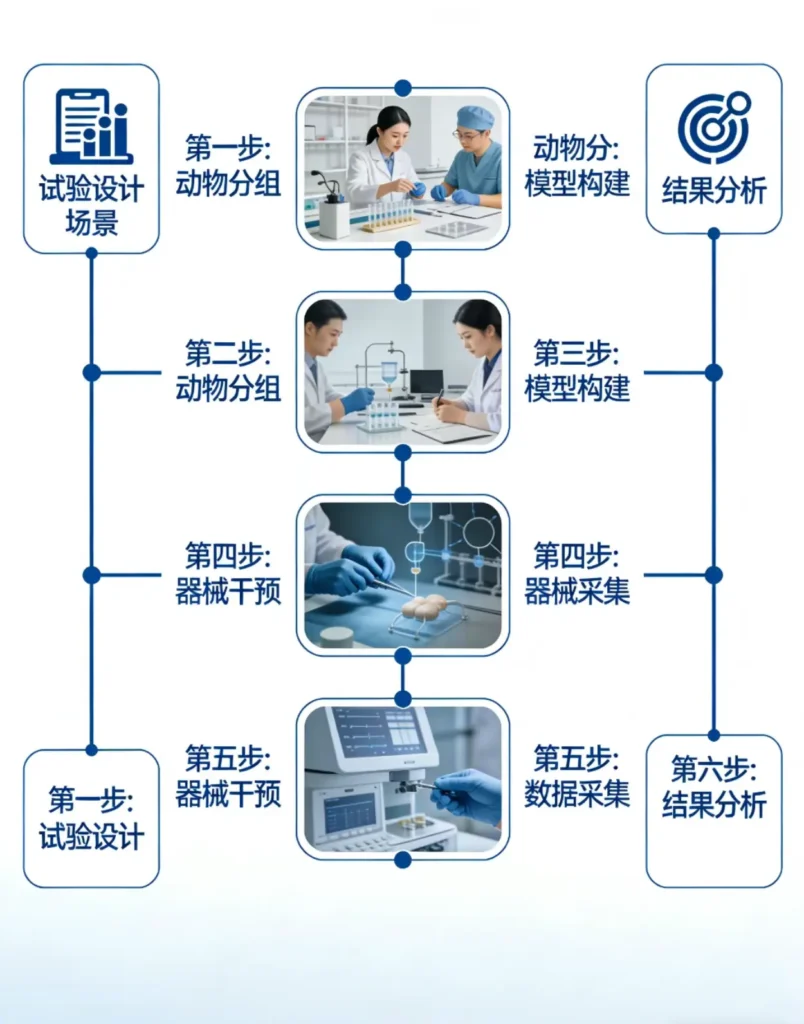
A well-designed animal study does three things. It reduces the risk of unexpected problems when you move to human clinical trials. It gives regulators confidence that your device is safe and effective. And it saves time — because a poorly designed study that needs to be repeated costs far more than doing it right the first time.
The animal study is the bridge between R&D and clinical use. Every detail in the protocol — animal selection, sample size, observation period, control group design — directly affects whether your device reaches patients on schedule or gets stuck in a regulatory loop.
About Junyan Yuanzhi — Canchem’s Preclinical Study Partner
Hangzhou Junyan Yuanzhi Biotech Co., Ltd. is a Canchem partner specializing in preclinical animal studies for medical device companies, pharmaceutical companies, and research institutions.
→ 3,000 m² GLP-compliant facility → Species: mice, rats, guinea pigs, hamsters, rabbits, dogs, cats, miniature pigs, primates → Services: pharmacodynamics, pharmacokinetics, toxicology, medical device safety and efficacy evaluation → Standards: GLP, ISO/IEC 17025, GB/T 16886 → Capabilities: large animal studies in cardiovascular, orthopedic, neurological, and other device categories
For preclinical study inquiries, reach out to us at Canchem and we’ll connect you directly with the Junyan Yuanzhi team.
Interested in Learning More?
Contact our team for technical specifications, sampling, or partnership inquiries.